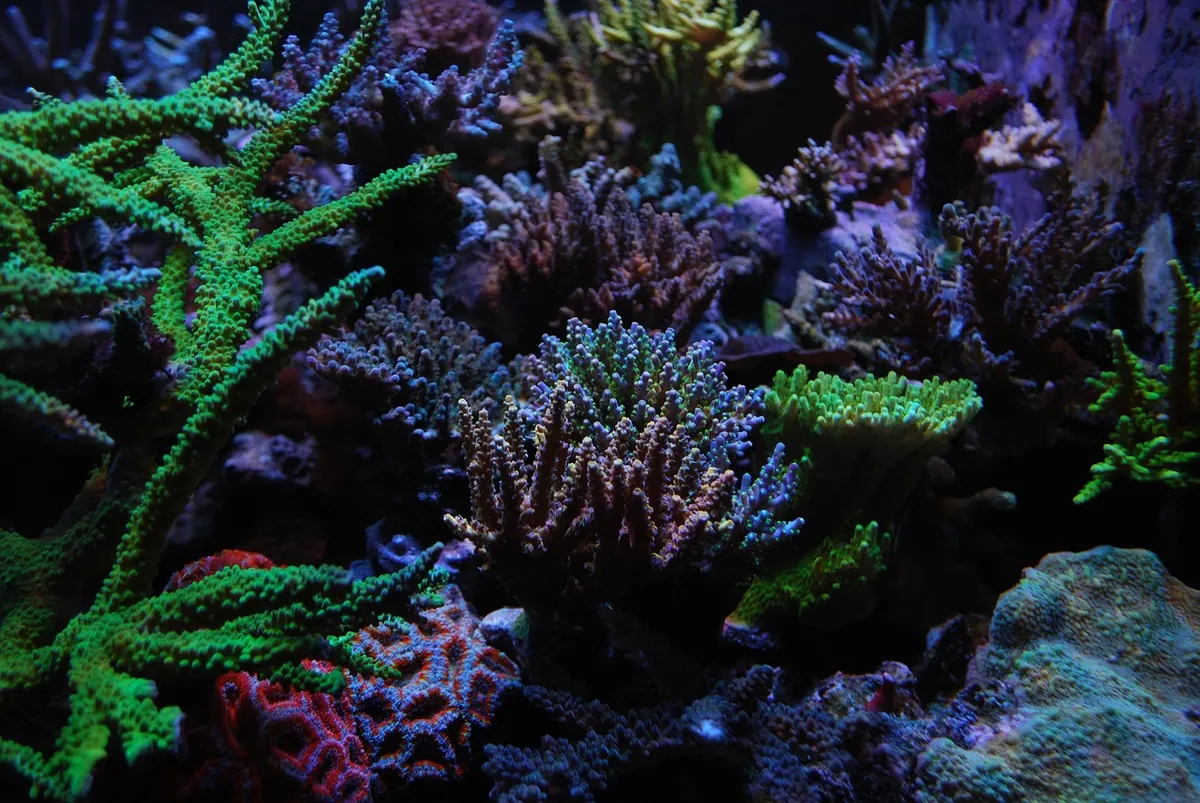
Soft corals are the friendliest introduction to reef keeping. They tolerate the wobbles new tanks go through, they do not need intense lighting or rock-solid calcium and alkalinity levels, and many grow quickly enough that you can see real progress within weeks. For a UK keeper with a modest tank, a few well-chosen softies will fill a rock structure with movement and colour without turning your evenings into a chemistry lesson.
Why soft corals suit a beginner's tank
Soft corals — leathers, mushrooms, star polyps, zoanthids and their relatives — have no stony skeleton. They get most of their energy from the microscopic algae living inside their tissue, so they thrive on the light you already have plus whatever they catch from the water. They also cope with nutrient levels that would upset more delicate corals, and they are far more forgiving of a small temperature or salinity slip.
Two things are worth knowing up front. Most soft corals are colonial and spread across rock, so careless placement means constant trimming later. And some of them sulk: a leather can close up, look shrunken and dull for days, shed a waxy layer, then open better than before. That is normal. Panicking and moving things around usually makes it worse.
Six easy soft corals to start with
Toadstool and finger leathers (Sarcophyton, Sinularia)
Tough, adaptable and often the centrepiece of a beginner's tank. Give them moderate light and gentle flow, and leave space around them to expand.
Green star polyps (Pachyclavularia)
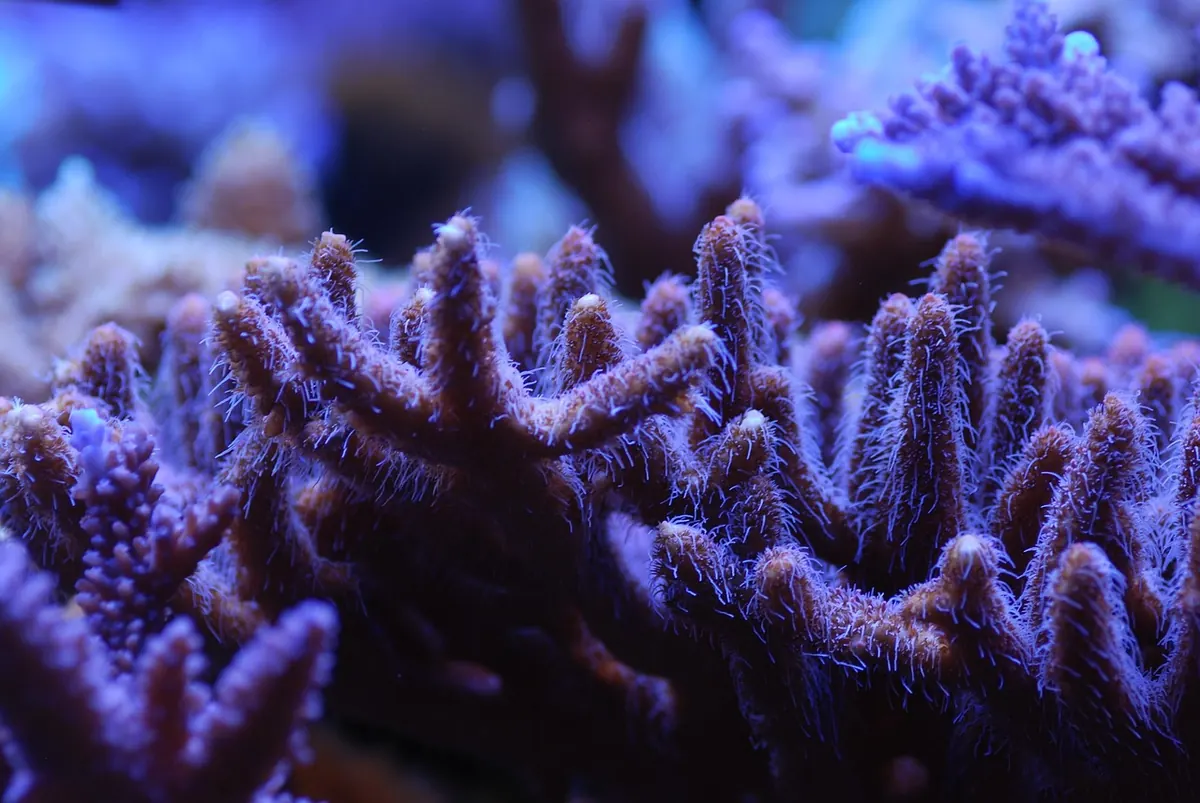
A purple mat with vivid green polyps. It spreads fast, so treat it as an island coral well away from your main rockwork.
Mushroom corals (Discosoma, Rhodactis, Ricordea)
Happy in low to moderate light near the bottom of the tank. Too much light or flow makes them shrink and detach.
Kenya tree (Capnella)
Fast-growing and slightly droopy, and it drops fragments that settle elsewhere. Pretty, but plan for its spread.
Zoanthids and palythoas (button polyps)
Colourful and quick to form a carpet. Handle them carefully: some contain a toxin that can cause illness if it enters a cut or is inhaled as an aerosol. Wear gloves, never frag them near your face, and wash your hands afterwards.
Pulsing xenia
Fascinating to watch and undemanding, though it grows quickly and can take over rockwork given the chance.
Placement, lighting and flow
Placement
Decide where each coral is going before you stick anything down. Soft corals are far easier to manage when they are separated from the main structure.
- Mount fast spreaders such as star polyps, xenia and Kenya trees on isolated rocks surrounded by sand.
- Put mushrooms and other low-light corals on the sand bed or at the base of the rock.
- Give leathers their own space, leaving a few centimetres of clear rock around them.
- Keep zoanthids low in the tank, so you are not reaching past them when you work in the water.
- Never let a soft coral touch a stony coral; chemical competition between them is real.
Lighting
Moderate is the word. Most soft corals do well under a mixed-reef LED unit run at roughly half its maximum output. If you upgrade your lights, raise the intensity gradually over several weeks rather than blasting corals on day one. Colour that fades to brown usually means too little light; a coral that stays shut all day may be getting too much.
Flow
Aim for gentle, broad, alternating movement. Polyps should sway, not be pinned flat against the rock. Mushrooms and xenia dislike strong flow; leathers tolerate more, but still prefer a steady current that carries waste away and brings food past them.
Water parameters and water quality
Soft corals are forgiving, but stability matters more than chasing a perfect number. Test weekly while the tank settles in, then adjust your routine to suit.
- Temperature: 24–26°C, held steady. A heater controller is cheap insurance against a stuck heater.
- Salinity: about 1.024–1.026 specific gravity. Top up evaporation with plain RO water, not salt water.
- pH: roughly 8.1–8.4. Steadier is better than higher.
- Alkalinity: 7–11 dKH. Soft corals use little of it, but swings still stress them.
- Nitrate and phosphate: nitrate around 2–10 ppm and phosphate below roughly 0.1 ppm. Soft corals tolerate more, but algae will take advantage.
- Calcium and magnesium: keep these in normal reef ranges for coralline algae and any stony corals you add later.
Use RO water rather than tap water from the start; the difference shows up in algae growth within a few months. Avoid anything copper-based in the tank, and be careful with aerosols, air fresheners, cleaning sprays and hand creams near open water.
Feeding, growth and troubleshooting
Most soft corals need no direct feeding at all. If you want to feed, a small amount of a fine plankton-type food once or twice a week is plenty, with pumps running. Overfeeding is far more common than underfeeding.
Expect the occasional odd behaviour:
- A leather closed for days: usually shedding. Leave it alone and keep the water stable.
- Mushrooms shrinking or detaching: too much light or flow, or a sudden parameter change.
- Everything closed at once: check temperature and salinity first, then look for a contaminant or a dead snail.
- Brown, dull colour: often too little light or high nutrients.
Place a new coral, then leave it alone for two weeks. Most soft corals settle and open faster when they are not being moved every other day.
Resist the urge to dose iodine or other additives. Test first, and only dose what you can actually measure.
Step-by-step: your first month with soft corals
- Let the tank mature for two to three months and get nitrate and phosphate under control before buying anything.
- Start with one or two easy frags — a toadstool and a mushroom make a sensible pair
Photo: agkaimal / Pixabay