Most marine tanks sail through a two-hour power cut with nothing more than a shrug and a slightly cooler room. The trouble starts when the outage runs past lunchtime, and you find yourself holding a torch over the sump wondering how long the fish have left. Winter is when this happens, and a little preparation in October saves a lot of panic in January.
Work out what actually fails first
When the mains goes, three things stop at once, and they fail at different speeds. Knowing which one bites first tells you where to spend your money and your attention.
Oxygen
This is almost always the first real problem. Your return pump, wavemakers and skimmer are all doing quiet work that you rarely think about: churning the surface, mixing air into the water and pushing carbon dioxide out. In a heavily stocked tank, that gas exchange matters more than warmth over the first few hours. Fish gasping near the surface, or hanging at the top of the tank, is the sign that oxygen — not temperature — is the emergency.
Temperature
Your tank sits somewhere around 24–26°C and your living room in February might be 16°C. The water will drift downwards towards room temperature. How fast depends on the volume, the surface area, whether the tank has a lid, and whether it's against an outside wall. A big tank loses heat slowly; a small, open-topped nano can shed degrees worryingly quickly. A slow drop is a stressor rather than an instant killer, but cold water plus low oxygen is a bad combination.
Filtration
Once flow stops, the bacteria in your filter media start to run out of the oxygen they need. Given a few hours they'll mostly be fine. Given a day or more, you can lose a chunk of your nitrifying capacity, and the tank may cycle slightly when the power comes back. Keep the media wet and submerged, either in the sump or in a bag of tank water, and don't be tempted to clean anything.
A useful rule of thumb: in a short outage, air beats heat. Get movement and surface agitation going before you worry about the thermometer.
Battery backup: what's worth powering
A battery-powered air pump is the single best value purchase you can make. They're inexpensive, run for many hours on a couple of D cells or an internal rechargeable pack, and one airstone in the display plus one in the sump can carry a stocked tank through a long night. Buy two, keep fresh batteries with them, and test them each autumn.
Beyond that, a small uninterruptible power supply — the sort sold for home offices — will keep a low-wattage wavemaker or return pump running for a while. Check the load carefully. Pumps measured in tens of watts are realistic; a 200W heater will drain the same battery far faster and is rarely worth it, because heat is much slower to leak away than oxygen is to run out. Some pumps run noisily or hot on a modified sine wave output, so if you're unsure, do a dry run before you need it.
A car-style leisure battery with an inverter gives you much more runtime, but treat it with respect. Keep it ventilated, fused, well away from salt spray and water, and never run it flat if you want it to last. If you go down the generator route, have it installed properly by a qualified electrician with a changeover switch, and never run a petrol generator indoors, in a garage or in any space attached to the house — carbon monoxide is a genuine killer. If you're at all unsure, take professional electrical advice.
Insulation buys you hours
Heat retention is cheap and effective. Cut polystyrene sheets from a builders' merchant to fit the back, sides and top of the tank, and add a layer of bubble wrap or an old duvet over the front if the room is cold. Leave a small gap somewhere for gas exchange if you're running an air pump — you want insulation, not a sealed box.
Close the doors, shut the curtains and keep that one room warm with an oil-filled radiator on a thermostat if you have a safe way to run it. Don't bring camping stoves, paraffin heaters or barbecues indoors. For a genuine emergency top-up, fill a couple of well-sealed plastic bottles with hot tap water and float them, checking the thermometer regularly so you don't overshoot.
Aeration and movement without mains power
An airstone placed so its bubbles break the surface is more useful than one bubbling away at the bottom. If you're at home and the outage is dragging on, stirring the surface with a jug every half hour will do real good. Point a battery-powered wavemaker at the surface if you have one, and avoid the temptation to leave lids shut tight if there's no gas exchange happening underneath.
Leave the filter alone and stop feeding
The kindest thing you can do for a tank in an outage is very little. Stop feeding immediately: fish cope with days without food, and every morsel adds ammonia to a system with no working biofilter. Don't dose anything, don't tinker with the rockwork, and don't lift the sump media out to inspect it. When the power returns, bring the pumps back on, check the return chamber isn't running dry, clean the skimmer cup if it has overflowed, test for ammonia, and feed lightly over the next few days rather than all at once. If the water goes cloudy, that's a bacterial bloom — a water change and patience will usually settle it.
Your priorities, in order
- Air and movement. Get an airstone running in the display and, if you can, in the sump.
- Insulation. Cover the tank, warm the room safely, slow the heat loss.
- Hands off. No feeding, no fussing, no filter cleaning.
- Watch. Check for gasping fish, slumped LPS, and how quickly the thermometer is falling.
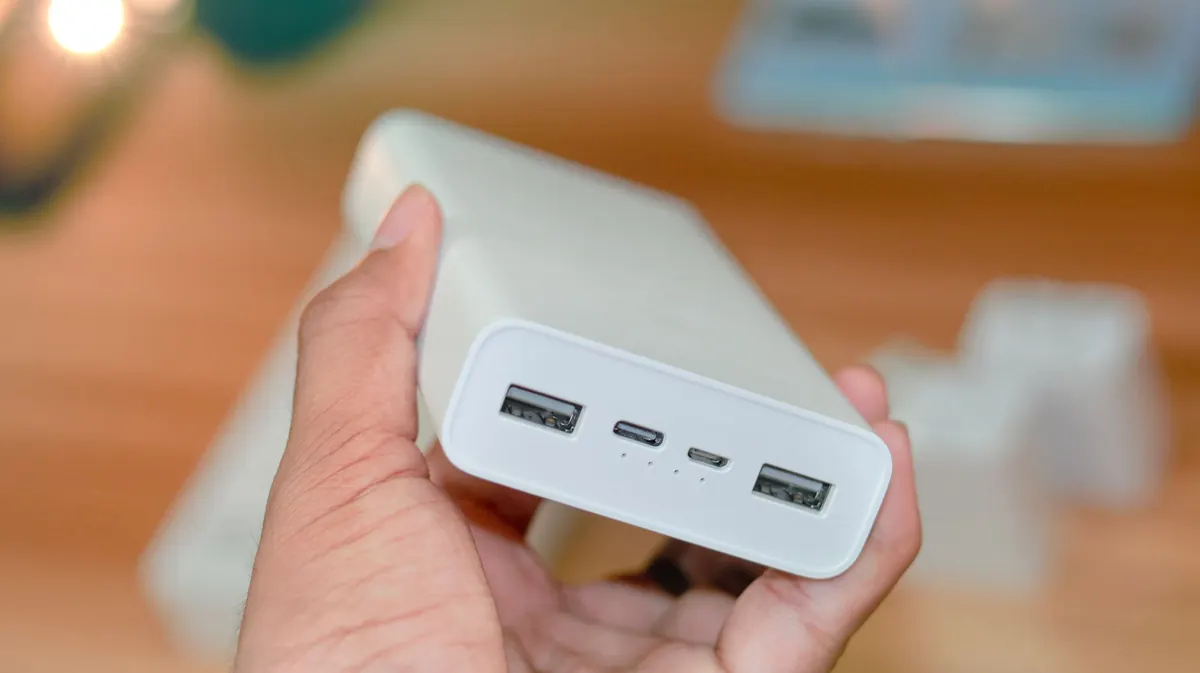
- Extend runtime. Swap in the second air pump, add a power bank, or run an RCD-protected extension lead from a socket that's still live — safely, and never across standing water.
A short winter checklist
None of this is expensive, and all of it is far easier to sort in October than at eleven o'clock on a stormy night.
- Two battery air pumps, spare cells, airline and airstones, tested.
- Polystyrene and bubble wrap cut to size and stored flat.
- A torch, a head torch, and a charged power bank kept somewhere you'll find them.
- A thermometer you can read at a glance without opening anything.
- A plan for anything past twelve hours: a friend on the same grid, a local shop or reef club that might hold livestock, and a note of who to call.
- If you keep a generator, a current safety check and advice from a qualified electrician — and a strict rule that it never runs indoors.
Run a practice drill once a year. Pull the plug on the tank for an hour, deploy the air pumps, and see how it all comes together. That hour of mild inconvenience is the difference between a bad night and a wiped-out tank.
Photo: Evan Mahmud Shuvo / Pexels